Plant Health Care Was Always the Real Job
Ask a homeowner what a tree company does and they'll say: cuts the tree. Ask an arborist and you'll get a different answer — or you should. The chainsaw is the smallest, last, most reversible part of the work. The job is the looking. The reading. The differential — the discipline of ruling things out until the real problem is the only one left standing.
That discipline has a name in this trade: Plant Health Care. PHC. Soil, tissue, pest, disease, treatment — the parts of arboriculture that keep a tree alive instead of taking it down. And it is exactly the part that every piece of software ever handed to an arborist completely ignored — see what plant health care software actually requires.
The software only ever knew the chainsaw
Look at what the industry tools were built to do: dispatch a crew, schedule the truck, generate the invoice, chase the payment. That's logistics for the cut. None of it was built for the part of the job that takes years to learn and decades to document. The CRM doesn't care why the maple is thinning. It cares that you billed for it.
So PHC lived where it always has — in the arborist's head, a paper form, a soil report in a drawer, a text thread, a folder of photos nobody will ever find again. The knowledge was real. The record was a rumor.
A removal should be a diagnosis — not a default.
The gap: you can't carry a pathology lab in your head
Here's the quiet advantage the big firms leaned on for decades: a PhD down the hall, an in-house lab, and a filing system that remembered every tree they'd ever touched. The independent arborist — the one who actually knows the street — had the eye but not the bench. You'd see the symptom, suspect three causes, and have no fast way to weigh them against this specific tree's history. So the honest move ("I need to test this") too often lost the client to the company that could test it the same afternoon.
The science was never proprietary. The access was. And the memory was. That's what's changing.
What changed: an AI that's read the whole tree
The AI built into ArbKeep isn't a chatbot with opinions about trees in general. It's scoped to one property and one chart — the soil chemistry, the pathology, every prior visit, every photo the tree already owns. It reasons from the tree's actual record, works the differential the way a good mentor would, and drafts a diagnosis and a treatment plan. Then it hands it to you. You confirm before anything reaches the client.
Alex Shigo spent a career teaching arborists how to read what a tree was telling them. The point was never to replace the arborist's eye — it was to sharpen it. That's the bar. A second opinion that never forgets, scaled to every tree on the route.
What it looks like working a real case
Here's the kind of thing that's happening now — a reflex call the soil panel overturned, because the whole record was finally in one place:
"Why is this pin oak yellowing between the veins — worse every year?"
No single photo gets you there. Interveinal yellowing reads as "needs iron" — the real answer only shows up against the soil panel: the iron's already in the ground, locked out by the pH. The reflex fix would have cost the client two seasons and a sulfur bill. That's not a smarter guess — it's the end of guessing.
It's not one lucky case
The same pattern is showing up across the book, every week now:
- "Water it more" — except it rained. The advice every stressed tree gets. The chart holds the property's own rain ledger — what actually fell at that address, week by week — so the watering call is grounded in the tree's real conditions, not the reflex from the truck.
- Pest pressure you can only see across time. Spotted lanternfly didn't arrive on one tree on one day. It builds — egg masses, then nymphs, then adults, host by host, season over season. Tracked on the chart, it's a calendar you can get ahead of. Logged on a sticky note, it's a surprise every July.
These are the insights PHC was always capable of — they were just trapped in the gap between what the arborist knew and what anyone could write down in time. We'll be opening up the full case studies in the posts ahead.
A second opinion, not a verdict
This is what the trade calls Diagnostic PHC — the discipline matters as much as the diagnosis. The AI drafts; the credentialed arborist confirms. It never publishes a risk call on its own, never hands a homeowner a verdict you didn't sign. What it removes is the friction — the differential you'd have run anyway, the soil cross-reference you'd have meant to do, and the write-up that, honestly, usually never gets written. The judgment stays yours. The documentation finally exists.
Every tree deserves a chart
When a doctor orders bloodwork, it doesn't live on a sticky note. It goes in the chart — beside the vitals, the history, the imaging, the treatment notes. The chart is the patient's story, told in data, across time. Trees never had that. PHC without a chart is just the same diagnosis, made from scratch, forever.
ArbKeep is the first electronic health record for trees. Every soil result, field assessment, treatment plan, and annual photo lands in one chart, for one tree, on one property — and the AI reads all of it before it says a word. That's the whole pitch: not a smarter chatbot, but Plant Health Care with a memory and a lab, in your shirt pocket, defending the tree that can be saved and staying honest about the one that can't.
The chainsaw was never the job. This was.
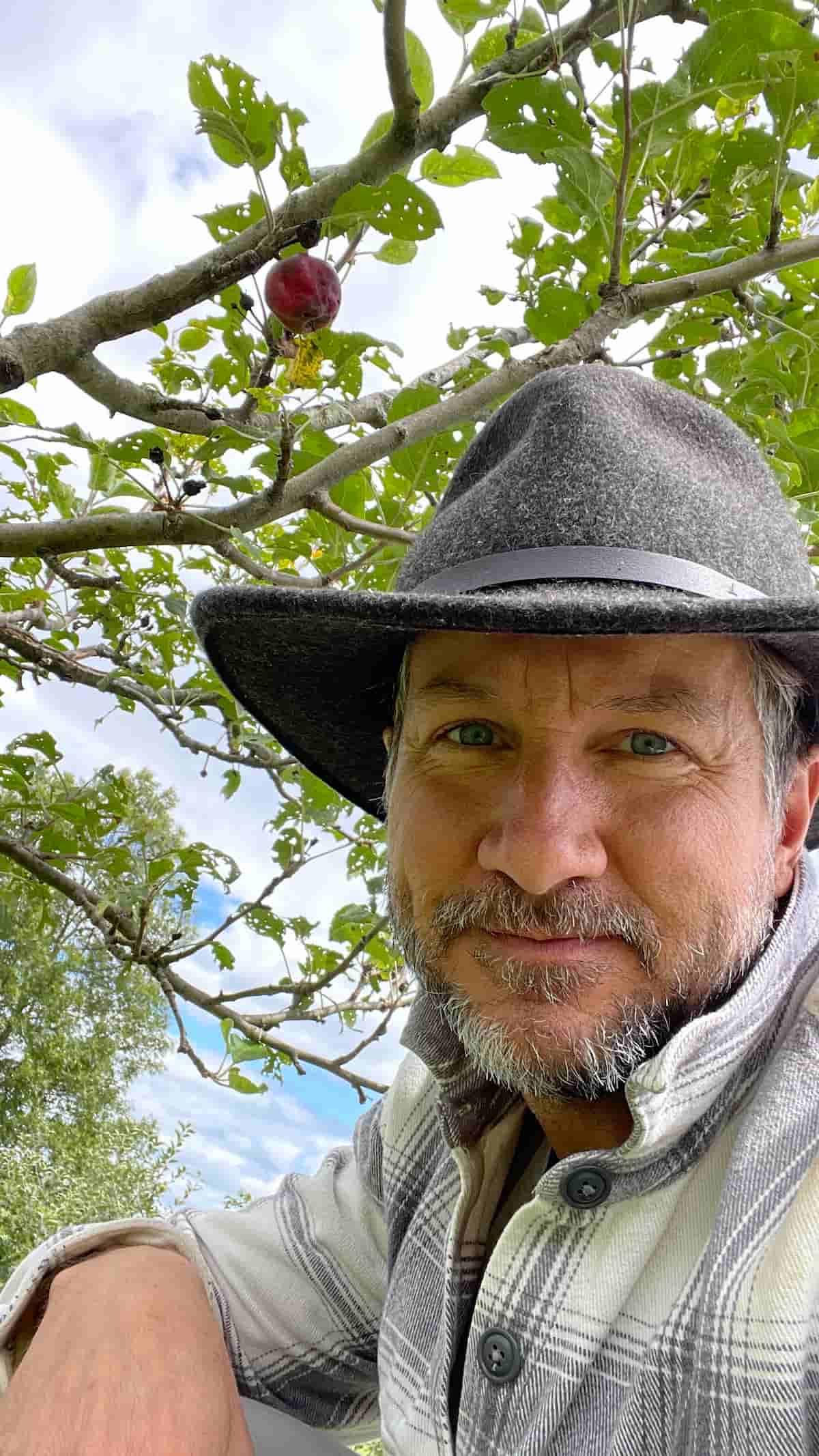
David All · Arborist in Upper Arlington, Ohio — by way of heritage apple orchards in Pennsylvania and old-growth conifers on the Olympic Peninsula. Builder of ArbKeep — the health record for trees. Featured in The Guardian. Ohio Chapter ISA member · Upper Arlington Tree Co.
ArbKeep is built by a working arborist, with a small founding group of arborists who'd rather sharpen a protocol than manage a crew. If that's you — and especially if you also write code, design, or do PHC science — come build it with us.